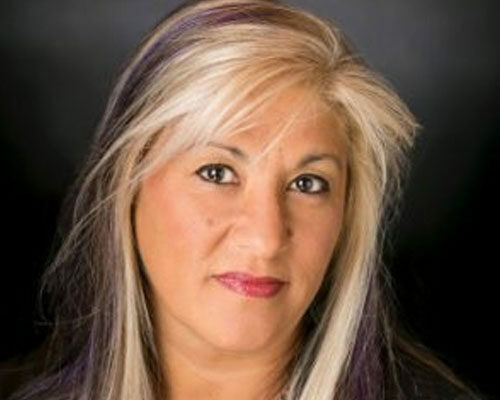
Toni Pavlovich is currently the SVP Professional Services and Sales at Splunk, where she manages a $200+ million P&L and more than 850 sales, services and partner delivery professionals in more than 20 countries. She has recently joined BeyondID as its newest board member.
BeyondID: So, you currently lead a global services organization at Splunk and have spent a good part of your career in professional services. How have service organizations changed in the last 10 years?
Toni Pavlovich: You know, I’ve seen quite a lot of change over the course of 10 years, but it’s been accelerating over the last couple years, especially as customers move to the cloud. When I think of the original work in services, it was all around top line growth and large services revenue and sometimes it would actually outpace license. The focus on services was revenue and billing and utilization. And I’ve started to see that change over time.
Customers have started to expect a lot of value out of the services they’re getting and so having to be able to deliver beyond that value and still balancing revenue and margin started the shift. So, it used to be very heavy on site, time and materials kind of work and it was bodies going to the customer site or doing staff augmentation. We’ve seen a shift over time focusing on customer success, value and adoption, which is how it should be, and how we should be thinking about the importance of services.
It is critical to understand and prioritize company expectations with customer satisfaction – what is number 1 – profitability, adoption, something else? To deliver a services team needs to understand capabilities even better now. You have to leverage the data and analytics that you have so that you can deliver with the right resources, you’ve got the right skills at the right time, and you can be more predictive about the needs of customers.
I think the other foundational piece that’s changed over time is the reliance on automation with tools. Whether those be finance tools or resourcing tools or project life cycle tools or whatever; operations have become a core function and efficiency machine for services.
The more recent shift has been customers moving to the cloud and SaaS where the relationship management piece is critical. Services team have to be able to promote customer success overall, ensure customers are adopting, that success and product usage are being emphasized the right way. Realization of their particular outcomes is paramount. It’s about the right services at the right time, making it easy, like offering subscription and advisory type of services. With COVID, most services organizations have had to significantly shift to deliver remotely. To really accelerate digitization, services teams have had to get more efficient and figure out ways to really ease the delivery for the customer; make it frictionless, mostly remote, and still reduce the cost to serve those customers with success again at the forefront.
The last thing that I would say is that what’s really critical – and I think it held true 10 years ago and still holds true today – is that the most important asset in a services organization is the people. The well-being and care of the people is paramount. It’s a very competitive market and services skills are in high demand. Customers have a lot of needs, but so do team members. I think trying to deliver the right services to customers with the right skill sets and the right people is important. The finesse of balancing that with team member satisfaction is an art. Ensuring happy employees yields successful customers which ultimately produces exceptional business results.
Do you think the pandemic will change the future of how services are managed? Do you think it will adopt more of a virtual model?
I do. I think customers are finding it to be a successful delivery model. For people who have been on the road and traveling in a services role, it’s tough. Some people can do it for long periods of time, but I think there’s a need to balance how much can be done remotely and how much can be achieved face to face. Certainly, there are requirements in particular industries where you may need to be on site, but I’ve seen a lot of customers that are really happy with the results of remote engagements and are finding it to be easy. No need to wait for people to fly and it’s possible to get skills and help when you need it – and quickly – when you’re working remotely.
It’s been a daily news topic about ransomware and cyberattacks. A couple of the most high-profile examples recently being JBS and Colonial Pipeline. President Biden signed an executive order a month ago to improve the nation’s cyber security efforts. A lot of focus is on cyber security and identity management. What are the key steps companies should take – and we know there are a lot, but in general – to ensure that they’re protected from cyberattacks?
Well, there are a lot. I think the memo that was written by the Deputy Assistant to the President, it called out some sound recommendations. Those are really sound recommendations. Backing up your data – it’s a necessary! While this seems so basic, it’s not always the motion and it is a must in order to recover from any attack. Also, keep your systems, your applications up to date. Hackers and attackers are getting more and more sophisticated. Keeping up with the latest technologies is critical.
Companies have to make sure that they have the right people; the right skill sets within the team to be able to implement a very sound cyber security strategy, and that all response actions and plans are tested constantly to validate security. The memo also notes segmenting the network and making sure everything is not available all in one place. Data in motion needs to be encrypted – this will ensure that if there is a data breach, it’s not usable. Making sure there is a good, sound view on end point detection, protection, that there is monitoring and responsiveness, and understand what action is needed and quickly. Using data and analytics to see what’s happening on all end points is going to be critical for all companies.
Multi-factor authentication is also important. It is an extra stop gap to prevent intrusion. So, there’s a lot of different recommendations that came from the White House. Organizations have to be serious about their security and be prepared to protect against the worst scenarios.
And that’s true of small and medium size business as well, right?
No doubt. And actually, on a personal level as well. Individuals have to be smart about protecting their own data. And small companies, large companies, have to make sure that data is safe. A smaller company breach can have a much broader impact as we have already seen.
One aspect of cyber security that is a key focus of BeyondID is identity management. So how do you see that as a critical component to a company’s overall strategy?
I think about identity as foundational, and it’s seen on our own personal devices. It’s a constant attack – phishing, etc. – requiring diligence, attention and protection constantly. Any data can be a security risk. But identity can also be used as a source of strength. If you look at the credentials that employees are using and the identification that they use to get into systems, it has to be very well protected. And it has to be part of the foundational efforts for any security for a company.
It’s a big burden. There’s a constant barrage of malicious attempts to get access which are getting more and more sophisticated. Many are trying to get in through user accounts. People share credentials, share passwords, use passwords that are common or easy to figure out. Creating policies and requirements for complexity of identification is going to be critical.
Everyone needs to have the right access, too. Provisioning for users to identification has to be priority. Identity protection and a sound strategy is foundational for any security strategy.
Let’s shift the conversation a little bit and talk about you. When did you first become interested in technology?
Well, I was always good at math and science and it came naturally. And I’m also really competitive. So, I played a lot of sports. I also loved music and played classical piano. And when I was going to go into college I thought, “I’m going to go into music.” And my dad said to me, “That’s not happening. First of all, you play basketball, so you’ll probably break your fingers. And then you can’t play the piano.” He was joking, sort of. Then he said, “You can do that on the side. So, what you should do is use your math and your science. And you should become an engineer.”
My dad insisted so I applied to schools to be a computer science and engineering major. I went to a great technical college, Rensselaer Polytechnic Institute (RPI), where there were lots of opportunities for interesting work and high demand for engineering skills upon graduation. And it was an opportunity to work on really cool real-life projects right out of school. I love technology. It kind of came naturally. And again, in college, it was a great opportunity to flex those math and science muscles and be able to use it beyond college, too. And yes, I still play piano AND basketball on the side.
Just out of curiosity, what sports did you play, and what sports do you still play?
I played basketball, volleyball and softball in high school and I went to college on a basketball scholarship. I love softball, actually and have played for many years after. Currently, I am a kick boxer, but I also compete in three-wall and four-wall handball. Which is not the team handball, but the individual handball. And I was a national champion at one point in my career in handball, as well. Again, my Dad’s influence.
That’s incredible! Shifting gears a little bit. You were an avionics engineer on the Stealth 117A fighter. What challenges did you face early in your career as a woman in engineering and technology?
You know, I was really lucky to work on that project. It was in Skunkworks at Lockheed, and it was amazing. I was right out of college and working on security clearance projects. But I think I started to see challenges as a woman in tech early. So, in college, I think the ratio of women to men was something like one to maybe 17 or 18. So it wasn’t uncommon where I was the only woman or one of a very few women in a class or on a project. So, you kind of got used to that being the norm.
And I found the same to be true when I was working on the Stealth fighter. I learned early on that keeping true to who I was – I’m an outgoing person, I have a strong voice and an opinion – it served me well, and while some people would probably call it bossy, I viewed that as a leadership quality. And where I really wanted to make sure that my voice was heard.
I know that a lot of times I felt like I had to be smarter than everybody else to get the respect that I desired. And I also felt like I had to push really hard to further my career and to have progression. But fighting for those opportunities was a great lesson. And I think the other thing was overcoming biases. Can you be assertive and come across the right way in an environment where the large majority are different than you?
There were a lot of challenges, but I think a lot of opportunities for me to figure out the right way to navigate it. To be uncomfortable was okay. Making sure that I had the proper visibility, I think, also was a great learning moment. And then I also made sure that I had a really strong mentor or coach or champion that could help me through some of the more difficult times. When you find yourself thinking, “Should I do this?” Or “Is this the right move?” And when you have someone that can help guide you along the way, that’s very helpful.
One other thing is I’m half Japanese and half Italian. So, there’s a lot of things about me that aren’t just “fitting in all the time” – all types of diversity in tech is important to understand. Find a way to use what you got and what strengths you can leverage to be valuable.
Women in STEM is a passion of yours. And you’re very much an outspoken advocate. What advice would you offer girls and young women interested in pursuing STEM as a career path?
You know, I did a lot of work in some tech schools with many girls that were focusing on math, science, engineering, and technology. What was interesting was that they loved it, but many times were uncomfortable and insecure about it. There was a lot of pressure from peers, from the other students, and sometimes even parents saying, “You shouldn’t be doing that. That’s not for you.”
The first thing that I was encouraging a lot of those girls to do is to really pursue what you love. If you find that this is where you want to be, and this is what you love to do, then you should continue. And don’t doubt yourself.
The second part, I think, is really believing in yourself, having confidence, and being brave. Because again, you’re making decisions for yourself. Lean in and step forward. And make sure that you are doing what you want to do, and that you’re not influenced to make a change when you don’t want to.
It’s really understanding who you are, what makes you happy, and what you are interested in studying and pursuing. And then just doing it and going for it with CONFIDENCE!
For women who have already taken STEM as a career path, any advice for them?
Well, I think it’s amazing and awesome. I think the first thing I would say is support other women and support diversity of any kind. It’s a great thing and studies have shown that diverse teams are more successful. I think it’s critical that you’re always learning. This goes for everyone, so this isn’t just about women in STEM. But I think the importance of continuing to learn and evolve and be better than you were is critical. Because things change fast.
Taking risks is also a key thing. Be innovative, take risks, and don’t be afraid. And then the last thing I would say is sometimes it’s difficult to get comfortable to say thank you to a job well done, and taking credit where credit is due. And while that can seem maybe a little bit self-serving, I think it’s important that people understand the value that they’re bringing, and that they take the recognition for their accomplishments. Obviously giving recognition to others is also important, but thank you is a great thing to be able to say, and a lot of people are very uncomfortable doing that.
We couldn’t agree more. Anything else you would like to add?
I’m just so excited to be working with BeyondID. I think some of the things that were standouts to me were the culture being built, the focus on customer success, the rate of growth, and the noble cause… giving back. I think the love of the people and taking care of them, and really servicing customers the right way was really something that I find amazing. And it’s really not very common in a lot of companies.
To learn more, fill out the contact form below: