Your AI agents are acting.
Are you in control?
AI agents are already in your environment, accessing data, calling APIs, executing workflows, and making decisions at speed.
The question isn’t whether to deploy AI – it’s whether you’re governing it.

91%
of organizations already use AI agents
80%
experienced unintended agent behavior
44%
have zero governance in place
23%
reported credential exposure via agents
The Identity Gap
Traditional IAM was built for humans.
AI agents break every assumption.
Agents don’t log in through federated SSO. They authenticate via API tokens and service accounts that live entirely outside your enterprise IdP’s visibility. Your IAM was never designed to govern this.

6 Critical Risk Vectors
Unauthorized data access
Agents bypass role-based controls and fetch data users were never authorized to see.


Credential leakage
API keys surface in agent prompts and environment variables where they can be exfiltrated.

Stale permissions
Old tokens and roles grant agents excessive privileges that are never reviewed or revoked.
Weak authorization
Coarse-grained rules allow any agent to execute sensitive actions regardless of context.

Compliance gaps
Agent actions aren’t tied to real user identities, creating audit failures and regulatory exposure.

Privacy exposure
Personal and sensitive data leaves secure zones and reaches unauthorized systems.
3 Questions Every Leader Must Answer

Where are my agents?
Most organizations can’t answer this accurately. Agents operate without IT’s knowledge in browsers, desktops, and third-party SaaS connections. Visibility isn’t aspirational—it’s the minimum standard for operating in production.

What can they connect to?
Once visible, map every resource each agent can reach—MCP servers, SaaS applications, agent-to-agent handshakes, vaulted credentials. A compromised agent chaining access at machine speed is fundamentally different from a compromised user account.

What can they actually do?
Knowing where agents are isn’t enough without runtime enforcement. You need a kill switch for immediate revocation, human-in-the-loop approval for sensitive actions, and complete audit logs flowing to your SIEM.
The Identity-First Answer
Every AI agent must be governed like your most privileged human user.
Identity is the control plane for AI security. By treating every agent as a non-human identity – discoverable, authenticated, governed, and auditable – we extend your existing Okta investment to govern every agent, model, and workflow.
Discover
Every agent enrolled in your IdP with a named human owner accountable for its behavior.

Authenticate
Zero long-lived tokens in production. Credentials vaulted and time-bound via Okta Privileged Access.

Authorize
Least-privilege access enforced at runtime. Every action scoped to the minimum required for each specific task.

Audit
Every action logged, attributable, and available for compliance against SOC 2, ISO 27001, and NIST AI RMF.

AI Needs Identity Too
AI agents are already accessing systems, data, and workflows across your enterprise.
Discover how identity-first security helps you govern, monitor, and secure AI at scale.
Deployment Sequence
The sequence matters as much as the controls.
The most common mistake enterprises make is jumping ahead to authorization before solving visibility. Tightened permissions only govern agents you already know about. Shadow AI keeps accumulating underneath.
Visibility first
Okta ISPM continuously scans for unregistered agents, over-privileged service accounts, and misconfigured OAuth clients across your entire SaaS estate.

Register & enroll
Every agent enrolled in Okta Universal Directory with a named owner and credentials vaulted via Okta Privileged Access. CI/CD integration makes governance a gate, not an afterthought.

Authorize at runtime
Okta Cross-App Access (CAA) enforces centralized authorization policies in real time. The MCP Adapter bridges third-party tools that can’t natively participate in Okta’s authorization flows.

Govern continuously
OIG runs automated access certification campaigns. ITP monitors agent behavior in real time. Universal Logout revokes access across every connected system instantly when an agent needs to be shut down.

Identity & Trust Layer
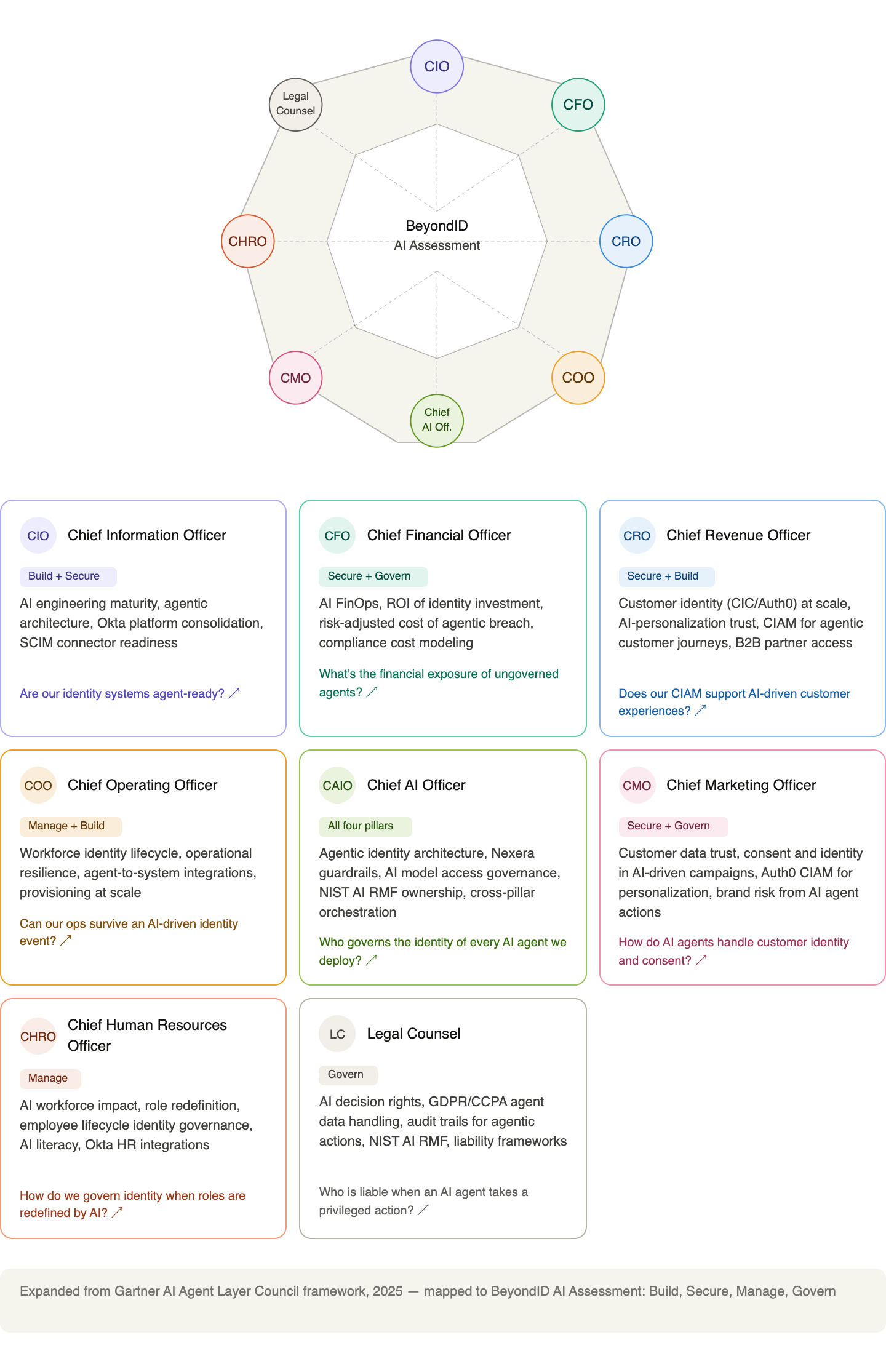
BeyondID governs every agent, model, and workflow with identity-first architecture, least-privilege access controls, and continuous monitoring.
AI Agent Inventory & Risk Classification
Okta IAM architecture & implementation
Zero Trust non-human identity governance
MCP server integration & security
Continuous compliance monitoring
AI Security Adoption Roadmap
Intelligence Layer
Nexera designs, builds, and runs production-grade AI systems from initial strategy through custom agent development and ongoing managed operations, with security baked in from the design stage.
AI strategy & architecture design
Custom agent & LLM development
Production deployment & operations
Agent-to-agent workflow orchestration
Ongoing managed AI operations
AI Governance, Risk & Operating Model

AI Governance, Risk & Operating Model
Okta ISPM — Identity Security Posture Management for continuous agent discovery
Okta Universal Directory — Non-human identity enrollment with named ownership
Okta Privileged Access — Vaulted, time-bound credentials. Zero long-lived tokens in production
Cross-App Access (XAA) — Next-generation agent-to-application authorization protocol
Identity Threat Protection — Real-time behavioral monitoring with automated remediation

On-Demand Masterclass: Governing the AI Workforce
Watch Arun Shrestha and Tom Wisnowski lead a masterclass focused on governing the AI workforce and what organizations need to securely operationalize AI at scale.
AI Agent Identity & Security Blueprint Packages
From strategy to production in 90 days.
Advisory and consulting services designed to discover, assess, and secure AI agents within your environment, defining an identity-first AI security strategy, architecture, and operating model.
AI Identity Readiness Sprint
Evaluate your organization’s AI identity posture before scaling adoption. This engagement helps uncover visibility gaps, assess governance readiness, and identify risks tied to AI agents, machine identities, and access controls, giving your team a clear roadmap for secure AI growth and faster decision-making.

Secure Architecture Blueprint
Design a scalable, identity-first security foundation for AI-driven environments. We help organizations align AI agents and enterprise systems into a unified architecture that reduces risk, strengthens governance, and enables secure innovation across the business.

90-Day Secure Agent Launch
Accelerate AI agent deployment with a security-first implementation approach. From identity governance to operational controls, we help organizations move AI initiatives into production securely, efficiently, and with reduced operational friction.

Managed AI Security Operations
Maintain visibility and control as your AI ecosystem expands. Our managed services help organizations continuously monitor AI identities, automate remediation workflows, and reduce the operational burden on internal security teams enabling secure AI operations at scale.

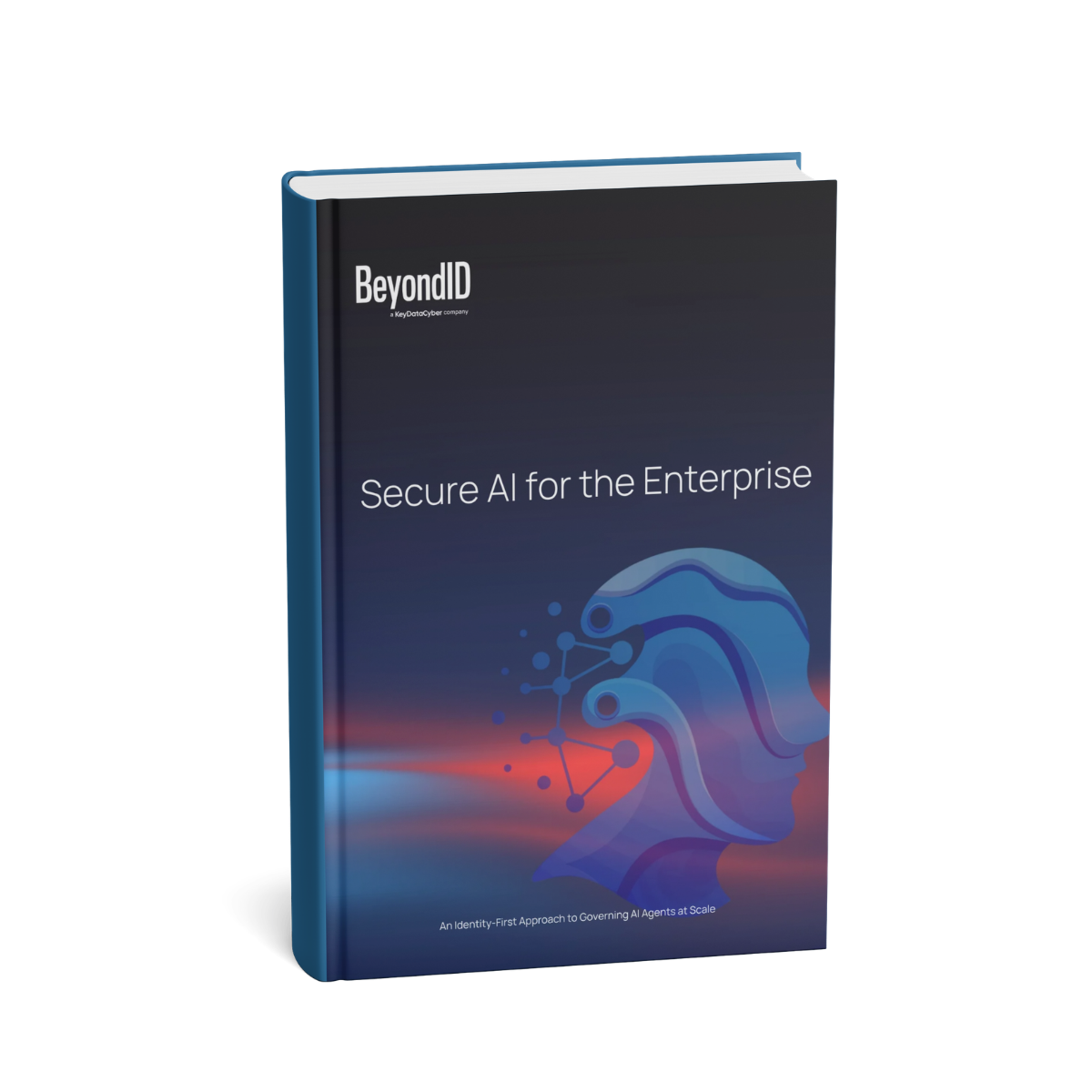
Secure AI for the Enterprise
AI agents are already operating across the enterprise but most organizations still lack the governance needed to secure them at scale. Our “Secure AI for Enterprise” Guide helps organizations govern AI agents, secure non-human identities, and operationalize AI with identity at the core.
What’s Inside:
Understanding AI Identity Risks
What organizations need to know about AI agents, non-human identities, and emerging security gaps.
Identity-First AI Governance
How organizations can securely govern AI agents, workflows, and machine identities at scale.
A Practical Roadmap to Secure AI:
A phased approach to operationalizing AI securely without slowing innovation.
Continuous Trust & Compliance
Best practices for monitoring AI activity, reducing risk, and maintaining visibility across AI environments.
The window is still open, but it’s narrowing
Every week that agents operate outside your identity security fabric is another week of audit exposure, compliance risk, and potential credential compromise. The architecture exists today. The tooling is mature. The methodology is proven.
Complete the form to download the Guide.